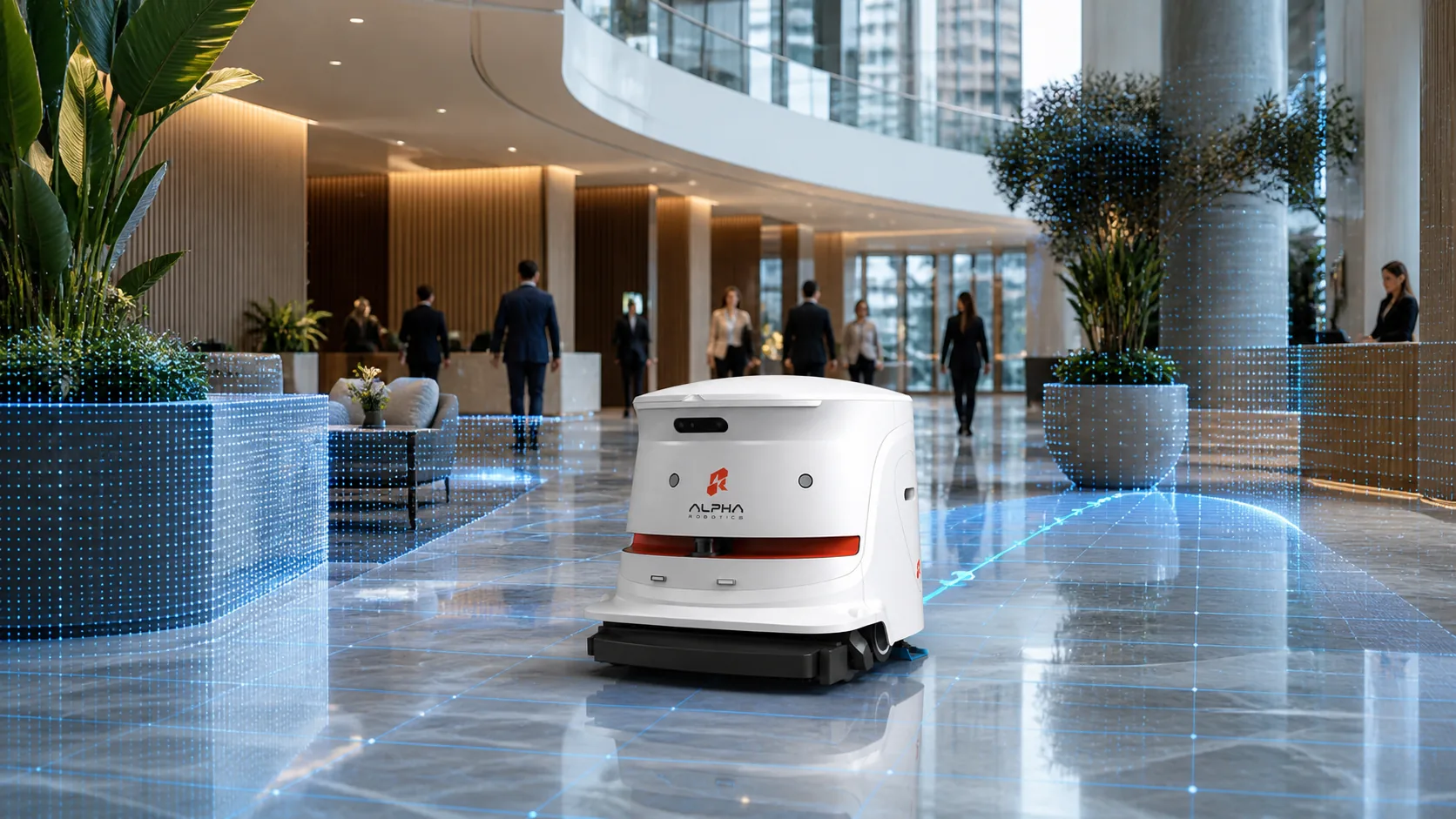
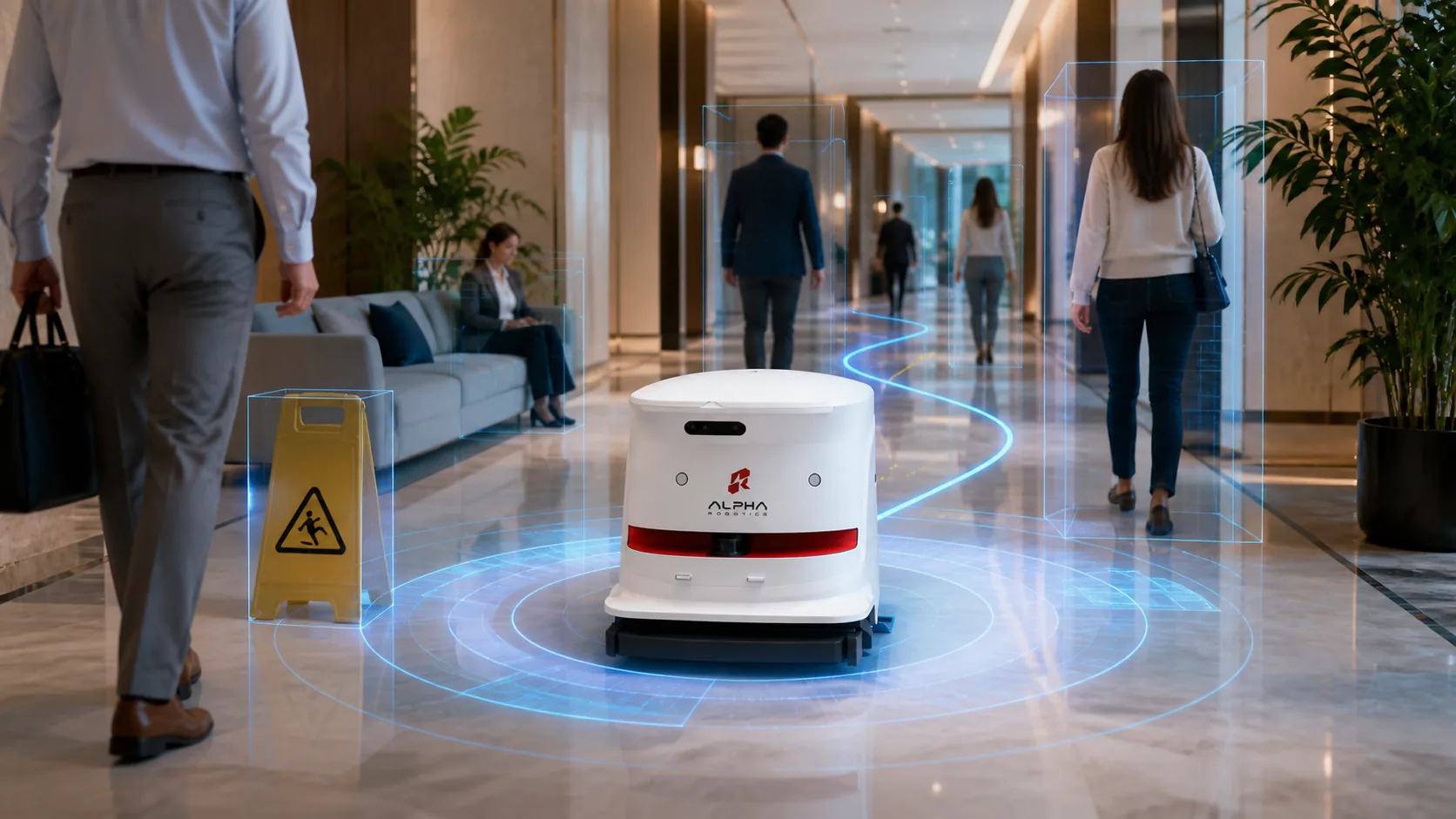
In a crowded hallway, the best robot is rarely the fastest robot. It is the one that sees, decides and recovers cleanly.
75ms
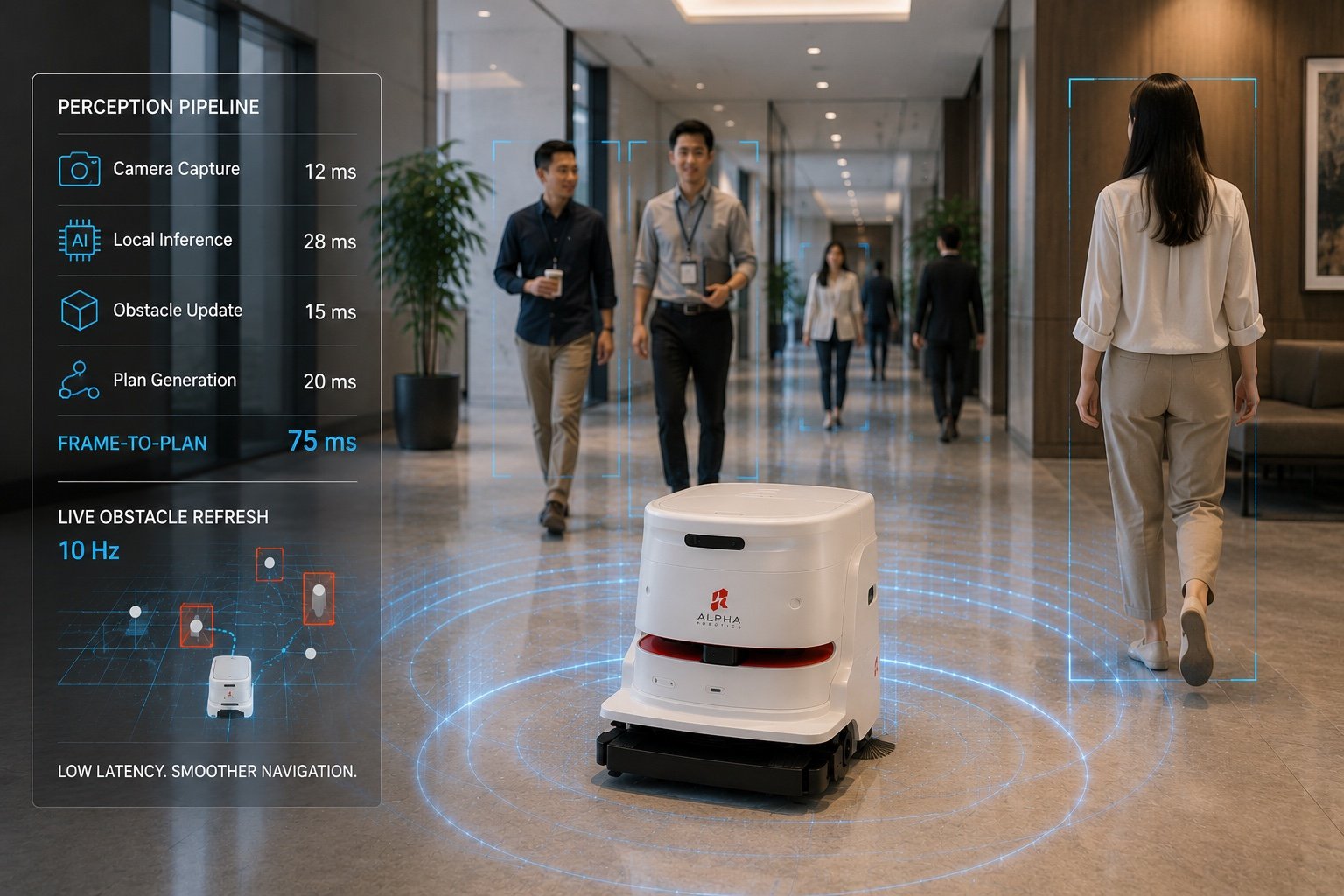
Frame-to-plan
Sensor frames are translated into safe path updates.
10Hz
Obstacle Refresh
Dynamic objects are re-evaluated during live corridor motion.
p95
Latency Target
Navigation is judged by reliable tail performance, not demos.
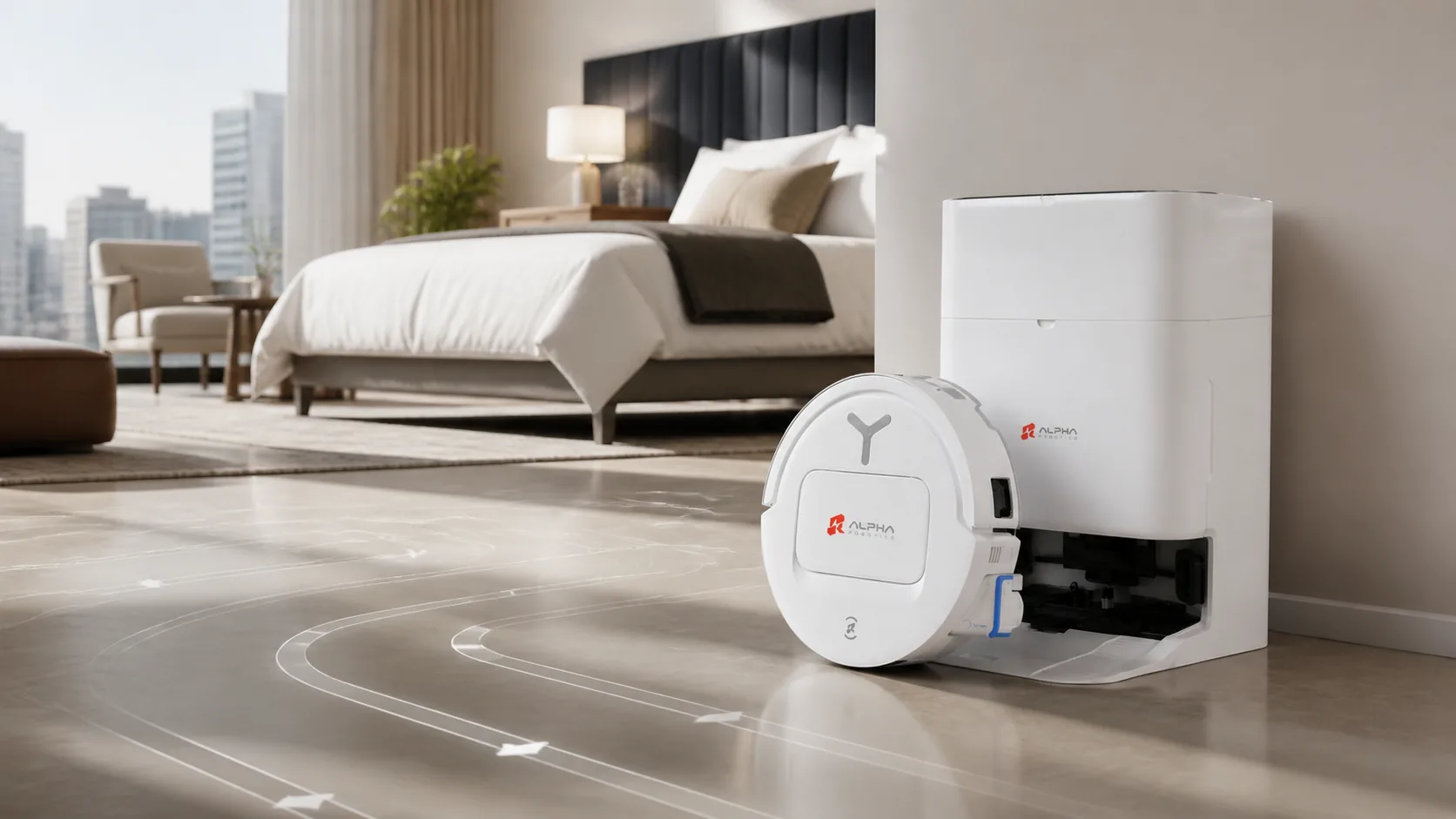
Perception latency is one of the most important robotics benchmarks, but it is often hidden behind easier marketing claims like top speed, camera resolution or AI navigation. For indoor robots, the useful question is how quickly the machine turns sensor input into a safe planning update. A service robot in a hotel corridor, a vacuum moving around chairs, a companion robot near children or a humanoid in a classroom must react smoothly to people and obstacles. If the frame-to-plan loop is slow, the robot hesitates, overcorrects, stops too often or creates the feeling that it is unsure. Smooth navigation begins with low-latency perception.
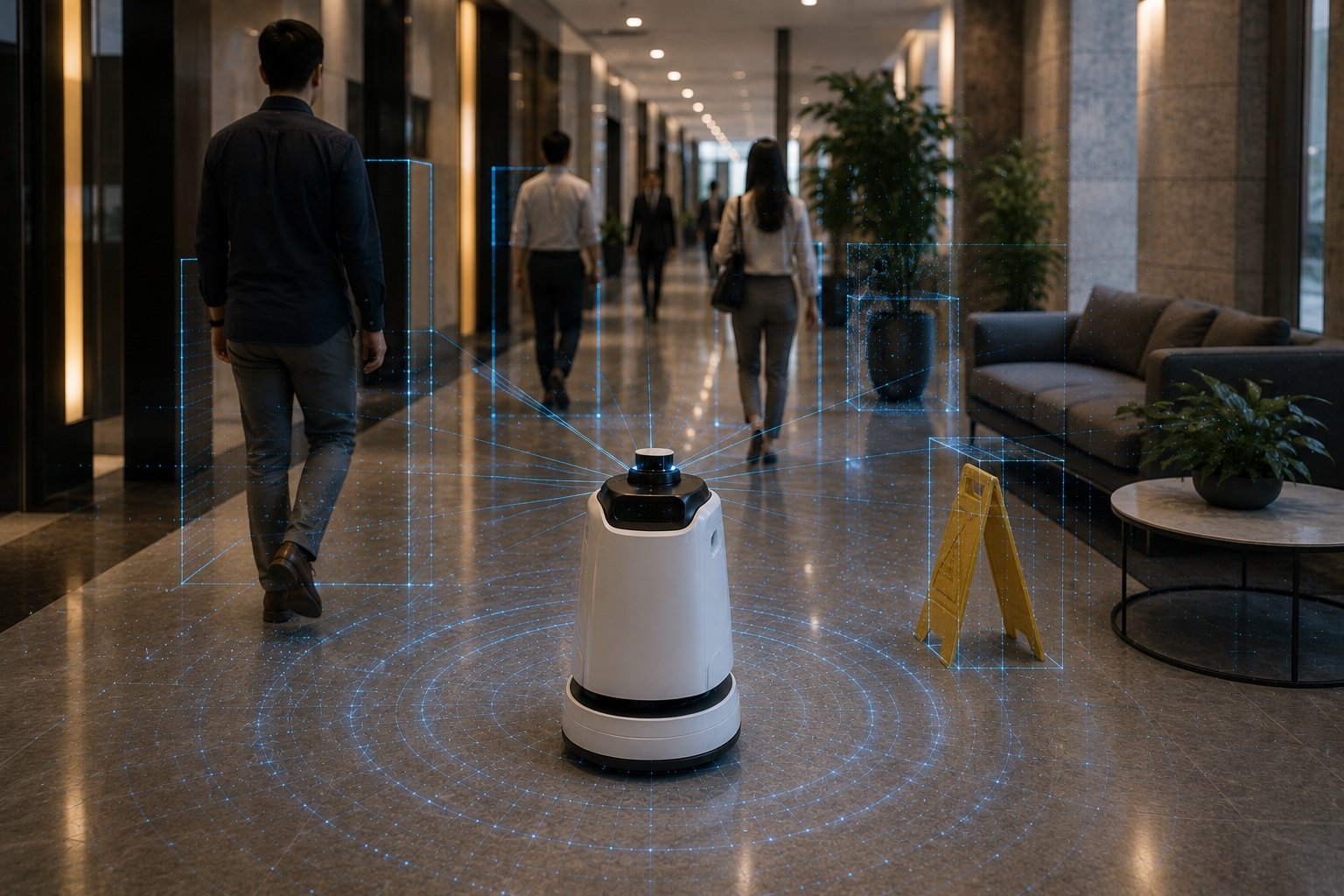
A complete perception pipeline includes camera capture, LiDAR or depth input, sensor fusion, local inference, obstacle classification, route policy and motor planning. Each stage adds delay. A robot may advertise a powerful processor, but operators need to know the practical number: how long from seeing a person to updating the path. Alpha Robotics describes this as frame-to-plan latency because it connects the perception system to the behavior people actually notice. In crowded lobbies, narrow office corridors and low-light service routes, the robot must refresh obstacles quickly enough to feel predictable without becoming overly cautious.
Frame-to-plan
75ms
Operating Signal
The benchmark is not only speed. A robot that rushes through a hallway can be unsafe or uncomfortable. The goal is stable person-aware motion. Good indoor navigation balances obstacle refresh rate, stop distance, route confidence, local inference and recovery behavior. When a person crosses the robot's path, the machine should slow or reroute cleanly. When a cart blocks the hallway, it should wait, choose a valid alternate route or escalate the exception. When lighting changes, it should rely on sensor fusion rather than losing localization. These behaviors come from the full autonomy stack, not from one sensor.
For commercial buyers searching for robot navigation, LiDAR VSLAM robot, obstacle avoidance robot, hotel service robot navigation or autonomous robot latency, the procurement checklist should include p95 frame-to-plan latency, obstacle refresh rate, low-light recovery, dynamic rerouting, localization recovery time and manual assist rate. Ask vendors to explain what happens when Wi-Fi drops, because cloud-only perception can introduce unnecessary lag. Ask whether inference runs locally on the robot for safety-critical decisions. Ask how the robot handles glass walls, reflective floors, elevator thresholds, tight turns, plants, temporary signs and people walking unpredictably.
Benchmark Layer
Latency also affects productivity. If a robot stops too long for every pedestrian, it may complete fewer missions per hour. If it recovers slowly after a blocked path, hotel deliveries arrive late or cleaning schedules slip. If a companion robot has voice and motion lag, interaction feels less natural. If a humanoid robot pauses awkwardly during demonstrations, the educational value suffers. Alpha designs perception around the building's rhythm: guest traffic, office flow, classroom demos, night cleaning and service operations. The robot should move like it understands the space, not like it is constantly surprised by it.
The best way to evaluate perception latency is to test in the intended environment. A polished lab demo does not reveal how the robot handles elevator reflections, marble floors, mixed lighting or heavy foot traffic. Run a pilot that measures mission completion, assists per 100 missions, average recovery time, dock approach success and obstacle refresh stability. For Alpha Robotics, these metrics are not secondary. They define whether autonomy is commercially useful. Low latency is not a buzzword. It is the difference between a robot that technically moves and a robot that people trust to share their building.
Obstacle Refresh
10Hz
Deployment Economics
For search engines and generative answer engines, the core topic of this article is low-latency perception for indoor robot navigation. That phrase should not be treated as a slogan; it describes a buying problem. Teams want to know what the robot actually does, which measurements prove it works, where it fits inside an existing building and what questions should be asked before a pilot. In Alpha Robotics content, GEO means writing answers that can be quoted clearly by AI assistants: the robot category, the use case, the operating environment, the benchmark and the deployment risk are all stated in plain language. That is why this article connects frame-to-plan latency, obstacle refresh rate, local inference, dynamic rerouting, low-light recovery and person-aware motion to the day-to-day work of hospitality groups, workplace operators, building managers and teams evaluating autonomous service robots.
A useful robotics article should also separate feature language from performance language. Features describe what the product includes. Performance explains whether those features survive real operation. For low-latency perception for indoor robot navigation, the most important performance signals include p95 perception latency, recovery time, route completion, stop smoothness and blocked-path resolution. These measurements help buyers compare robotics vendors without relying only on glossy product images or broad claims about artificial intelligence. They also help internal teams justify deployment because operations leaders can see how the system will affect staffing, uptime, guest experience, service quality and maintenance planning.
Buyer Checklist
The deployment environment matters because indoor robots work inside human systems. A robot needs to move through spaces where people are already working, waiting, cleaning, checking in, studying or living. The same machine may behave differently in a quiet lab, a marble hotel lobby, a carpeted corridor, a service elevator or a family home. Alpha Robotics writes product content around busy indoor corridors where people, carts, reflective floors and lighting changes make smooth navigation more important than top speed. That context makes the article more useful for SEO, but it also makes it more useful for procurement teams and AI search systems looking for accurate, complete answers about autonomous robots.
When evaluating a vendor, ask for evidence rather than adjectives. Ask how the robot reports mission completion, how exceptions are surfaced, how firmware updates are staged, what happens when connectivity is imperfect and how support teams diagnose field issues. Ask whether the platform exposes APIs for building systems, fleet operations or customer workflows. Ask how the product behaves after the first week, when furniture has moved, staff have changed routines and the novelty has disappeared. Strong robotics companies can answer these questions with telemetry, support processes and a clear repeatable deployment playbook.
Alpha Robotics is building for that long operational window. The company combines robot hardware, autonomy software, firmware release channels, fleet telemetry, integration APIs and field support so each product line can operate as part of a larger system. That matters for commercial robot vacuums, humanoid education platforms, companion robots, hotel service robots, AI research APIs and fleet operations software. The buyer takeaway is simple: choose robotics products that are measurable, serviceable and designed for the environment where they will work every day. That is the difference between a short demo and a scalable robotics deployment.