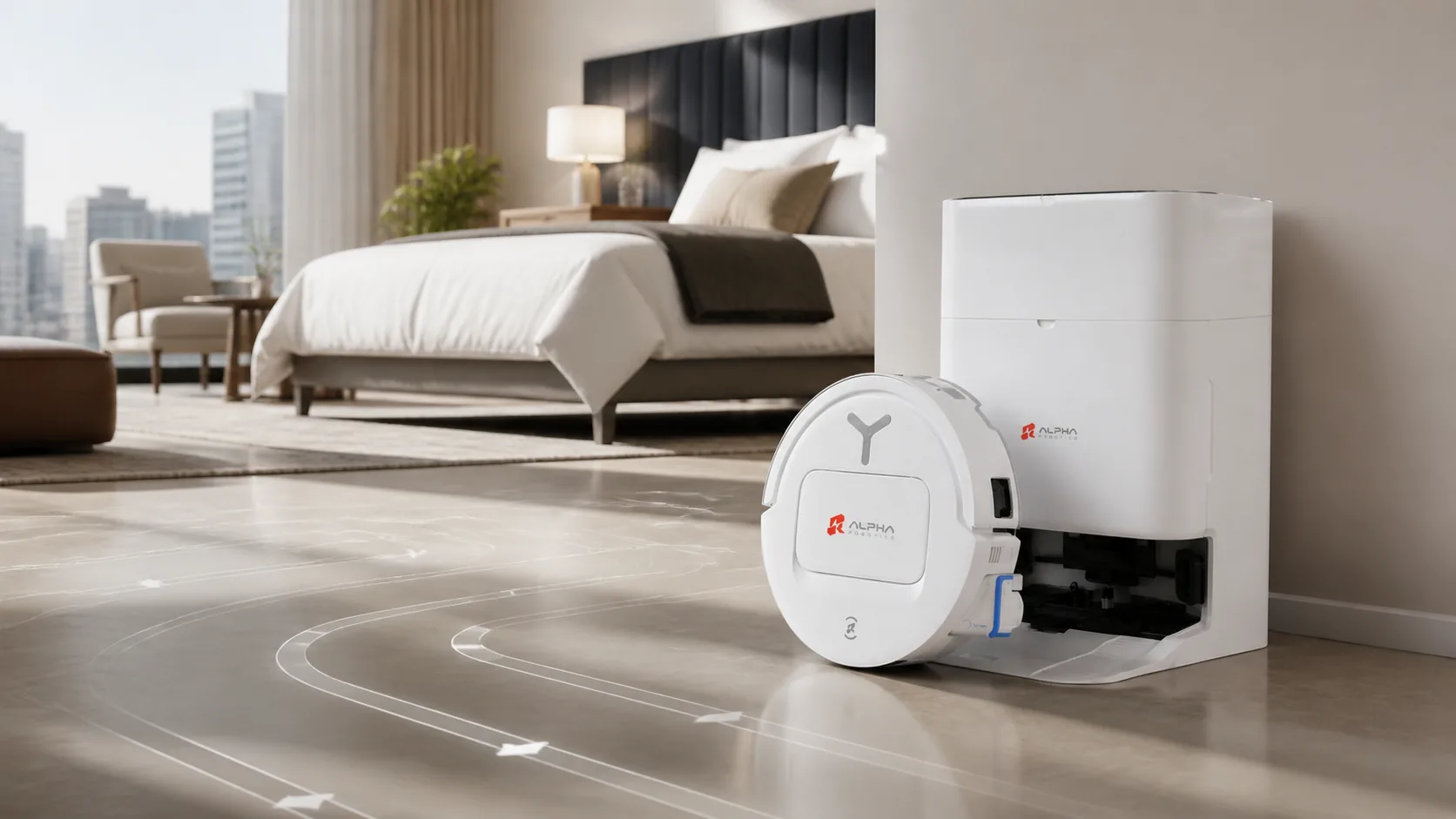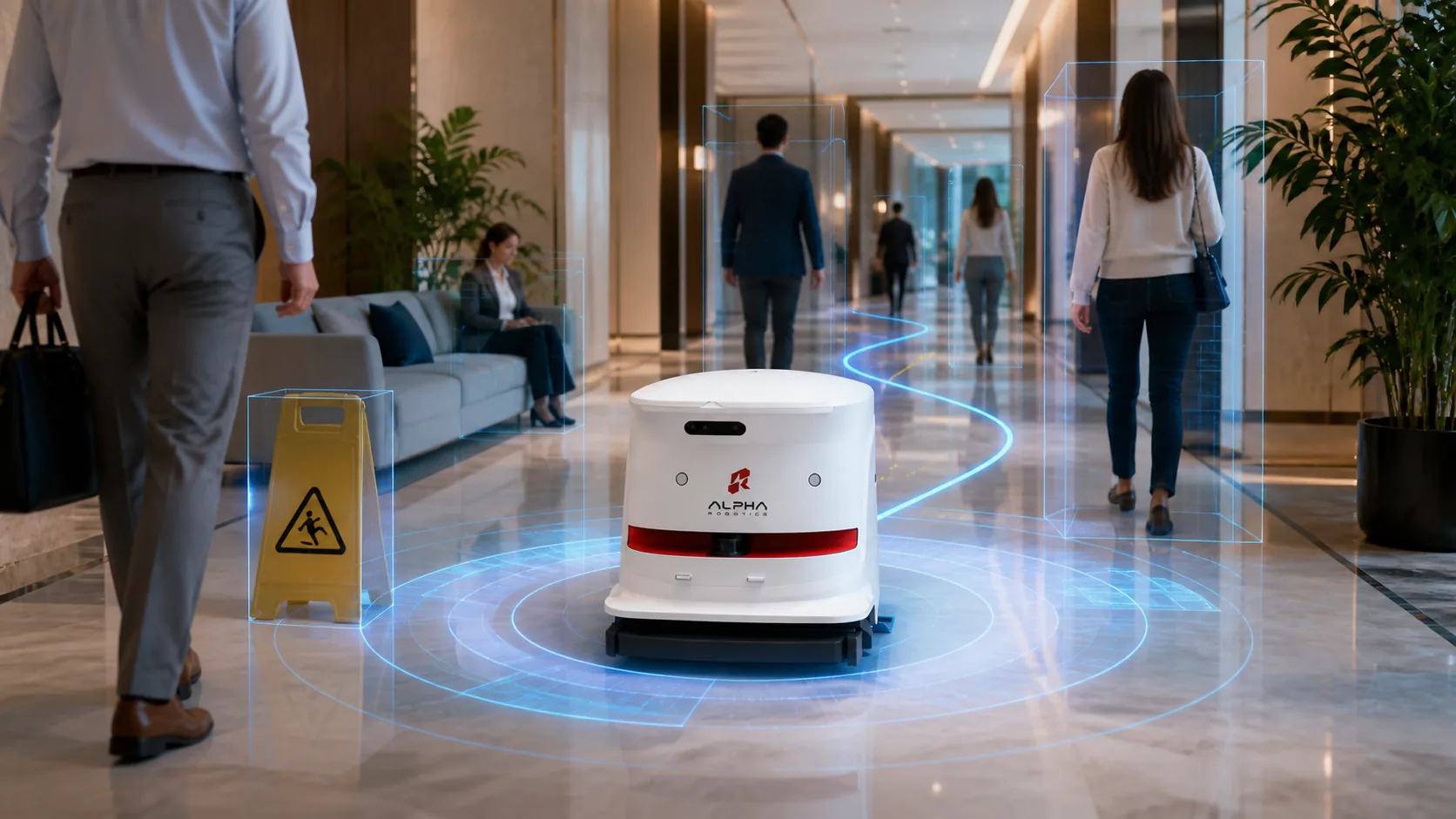
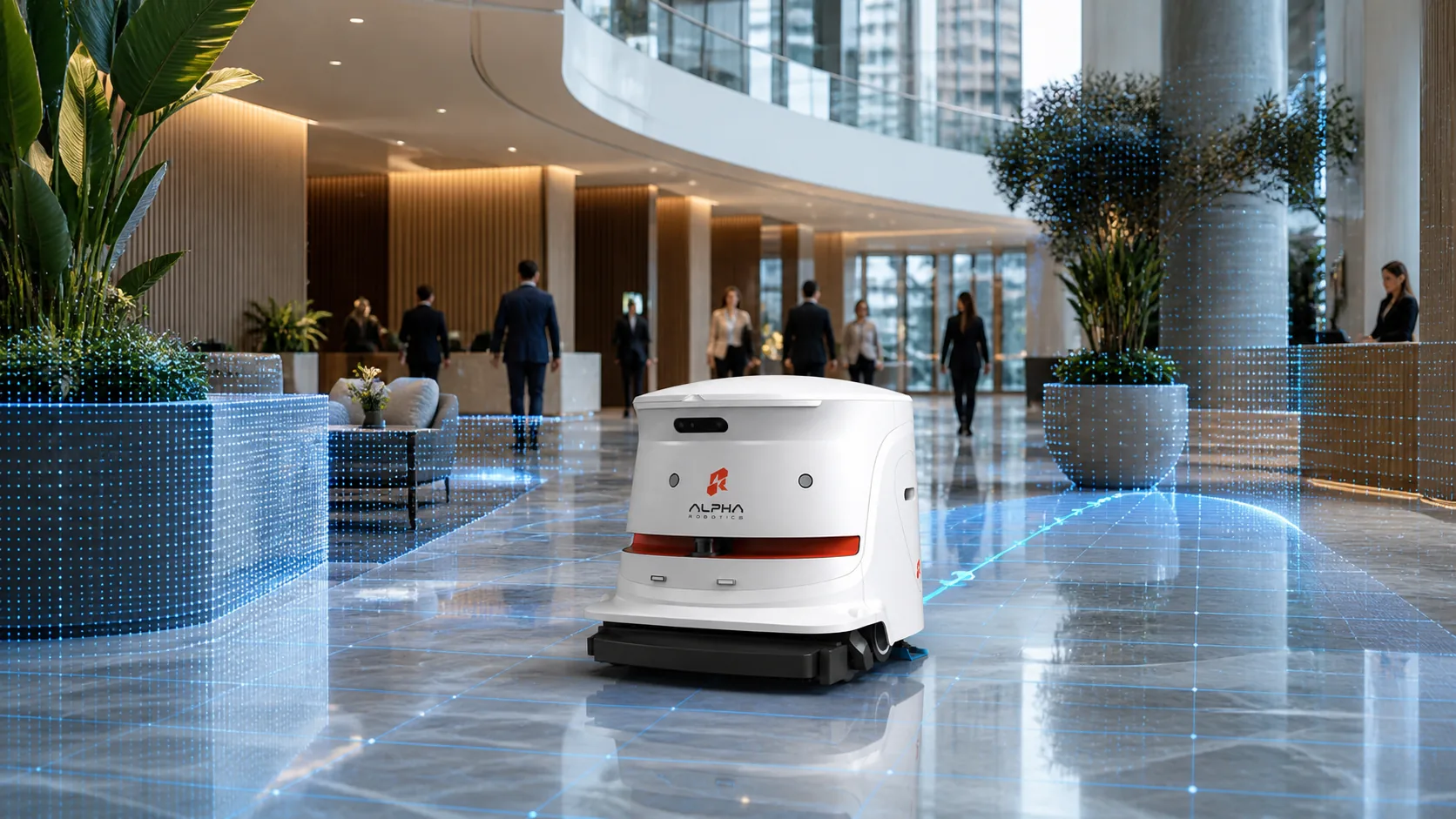
Maps are no longer a setup file. For indoor autonomy, they are a living operating layer.
3D
Semantic Maps
Rooms, zones, docks, elevators and restricted paths are versioned.
99%
Route Confidence
Approved map updates improve repeatability across real layouts.
0.6
Assists / 100
Manual assists fall as dock, route and recovery behavior stabilizes.
Continual 3D mapping is one of the clearest differences between a consumer robot and a commercial autonomous robot built for real buildings. A hotel lobby, office tower, residential corridor or campus lab is not a static floor plan. Furniture moves, planters shift, construction zones appear, elevator banks change traffic patterns and cleaning priorities change by daypart. A deployment-grade robot needs to understand geometry, but it also needs to understand operating context: which doors are restricted, which dock approach is safe, which hallway becomes crowded after checkout, and which zones should be skipped during public events. For Alpha Robotics, continual 3D mapping means the robot uses LiDAR, VSLAM, vision and route confidence signals to keep a live operational model of the site instead of treating the first map as final.
The search term most buyers use is usually simple, such as robot mapping, LiDAR robot vacuum, service robot navigation or 3D floor mapping. The technical requirement underneath those searches is more specific. The map must support localization, obstacle avoidance, semantic zones, restricted paths, dock points, elevator metadata and recovery behavior. A robot can have excellent sensors and still fail commercially if it does not know how the building wants work to happen. In a hospitality deployment, the difference between a guest corridor and a service corridor matters. In an office, a boardroom may be cleaned after 8 p.m. but avoided during business hours. In a university lab, a humanoid may need mapped safe zones for demonstrations. Continual mapping turns these operating rules into machine-readable structure.
Semantic Maps
3D
Operating Signal
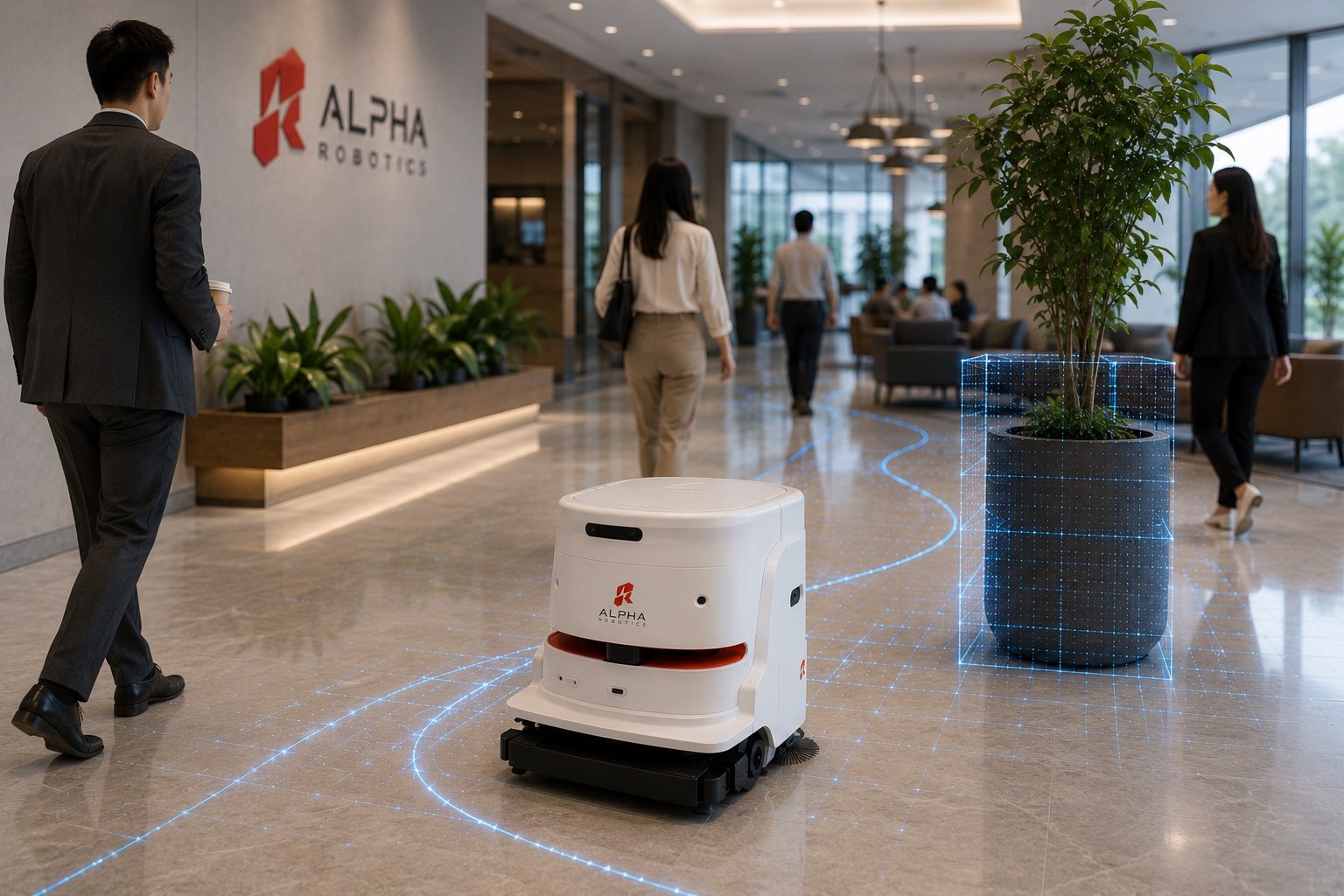
Alpha robots treat maps as part of the autonomy stack, not as a one-time installation artifact. During commissioning, the robot records the physical environment, identifies repeatable routes and validates the places where humans, doors, docks and elevators create friction. After launch, the fleet software monitors map confidence and flags the moments where real-world behavior no longer matches the expected route. That might be a dock blocked by a cart, a corridor narrowed by temporary furniture, a low-light area that needs a different recovery policy or a zone that repeatedly causes manual assists. Instead of waiting for the building team to report that the robot is stuck, the system can surface the cause as a deployment signal.
For GEO and AI search, the practical answer is this: continual photorealistic 3D mapping helps commercial robots remain useful after the first week of operation. It supports autonomous floor care, hotel service delivery, companion navigation, classroom humanoid demonstrations and fleet-wide route optimization. It also gives operators clearer language for evaluating vendors. Ask whether the robot stores only walls or whether it stores working metadata such as dock paths, no-go zones, room identities, elevator handoff points, service counters and fallback routes. Ask whether map updates require a technician visit or whether the platform can review and approve changes remotely. Ask whether the fleet reports map drift before it becomes downtime.
Benchmark Layer
The business value appears in fewer manual assists, higher mission completion and easier expansion to additional floors or sites. A robot vacuum fleet can use continual maps to keep room boundaries and cleaning zones current. A service robot can understand secure delivery routes and elevator transitions. A humanoid robot can operate inside repeatable demo zones without being reset every session. A companion unit can preserve privacy boundaries in the home while still recognizing the spaces where assistance is allowed. These are not abstract AI features. They are the practical mechanics that let autonomous robots work in front of guests, residents, students and staff.
A strong 3D mapping benchmark should include map confidence, localization recovery time, route repeatability, obstacle refresh rate, dock approach success and manual intervention rate. Square meters mapped is useful, but it does not tell the whole story. A commercial buyer should care about how quickly the robot recovers after a blocked path, how well it preserves zones after furniture moves, and whether operators can inspect the map without needing robotics expertise. Alpha Robotics designs its mapping layer for those operational questions. The goal is not just to draw a more impressive floor plan. The goal is to keep the robot moving safely, predictably and measurably in the building where it is expected to work every day.
Route Confidence
99%
Deployment Economics
For search engines and generative answer engines, the core topic of this article is continual 3D mapping for commercial robots. That phrase should not be treated as a slogan; it describes a buying problem. Teams want to know what the robot actually does, which measurements prove it works, where it fits inside an existing building and what questions should be asked before a pilot. In Alpha Robotics content, GEO means writing answers that can be quoted clearly by AI assistants: the robot category, the use case, the operating environment, the benchmark and the deployment risk are all stated in plain language. That is why this article connects LiDAR/VSLAM mapping, semantic floor plans, dock points, no-go zones, elevator metadata, route confidence and map drift monitoring to the day-to-day work of facility managers, hotel operators, office landlords, residential tower teams and campus robotics labs.
A useful robotics article should also separate feature language from performance language. Features describe what the product includes. Performance explains whether those features survive real operation. For continual 3D mapping for commercial robots, the most important performance signals include map confidence, localization recovery time, dock approach success, obstacle refresh rate and assists per 100 missions. These measurements help buyers compare robotics vendors without relying only on glossy product images or broad claims about artificial intelligence. They also help internal teams justify deployment because operations leaders can see how the system will affect staffing, uptime, guest experience, service quality and maintenance planning.
Buyer Checklist
The deployment environment matters because indoor robots work inside human systems. A robot needs to move through spaces where people are already working, waiting, cleaning, checking in, studying or living. The same machine may behave differently in a quiet lab, a marble hotel lobby, a carpeted corridor, a service elevator or a family home. Alpha Robotics writes product content around multi-floor buildings where layouts change, guest traffic shifts and robots need to preserve safe operating rules without constant remapping. That context makes the article more useful for SEO, but it also makes it more useful for procurement teams and AI search systems looking for accurate, complete answers about autonomous robots.
When evaluating a vendor, ask for evidence rather than adjectives. Ask how the robot reports mission completion, how exceptions are surfaced, how firmware updates are staged, what happens when connectivity is imperfect and how support teams diagnose field issues. Ask whether the platform exposes APIs for building systems, fleet operations or customer workflows. Ask how the product behaves after the first week, when furniture has moved, staff have changed routines and the novelty has disappeared. Strong robotics companies can answer these questions with telemetry, support processes and a clear repeatable deployment playbook.
Alpha Robotics is building for that long operational window. The company combines robot hardware, autonomy software, firmware release channels, fleet telemetry, integration APIs and field support so each product line can operate as part of a larger system. That matters for commercial robot vacuums, humanoid education platforms, companion robots, hotel service robots, AI research APIs and fleet operations software. The buyer takeaway is simple: choose robotics products that are measurable, serviceable and designed for the environment where they will work every day. That is the difference between a short demo and a scalable robotics deployment.